
FRP Sectional Water Tank: The Ideal Water Storage Solution for Hot & Coastal Regions
Blog
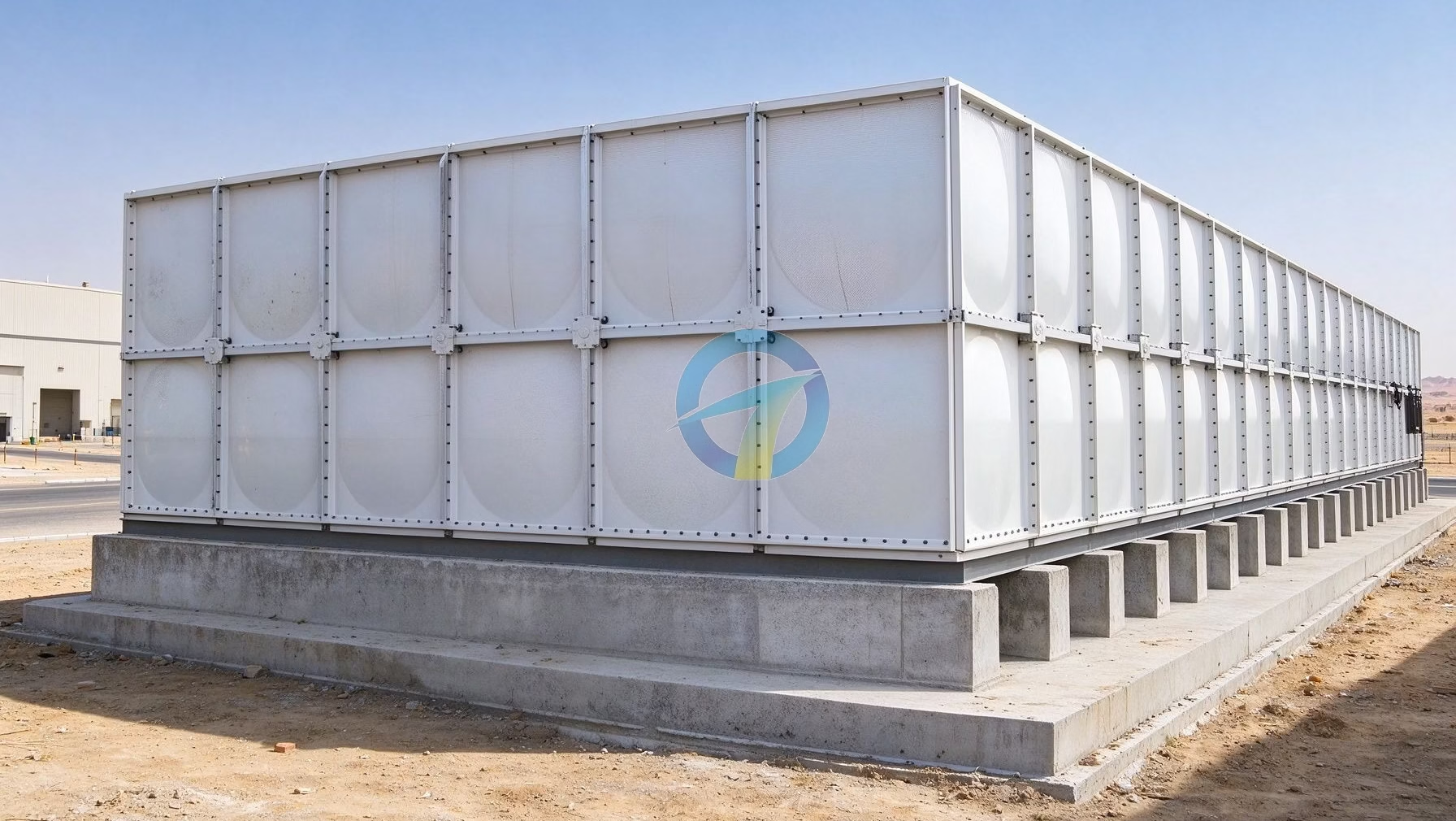
FRP Sectional Water Tank: The Ideal Water Storage Solution for Hot & Coastal Regions
Key Takeaways FRP sectional water tank (also known as GRP water tank) uses bolted SMC fiberglass panels. It will never rust, and the panels are lightweight.
For years, we’ve supplied these modular tanks for hot, humid, salt-spray coastal projects across the Middle East, Africa and Southeast Asia. Since panels come disassembled, ocean shipping and site assembly become much simpler. These tanks work for drinking water, fire suppression water and general industrial water storage, but they also have practical limits you need to consider before ordering.
What is an FRP Sectional Water Tank?
An FRP sectional water tank is a modular bolted storage tank built with molded SMC fiberglass reinforced plastic panels.
Instead of manufacturing one huge welded tank and struggling with container shipping, we split the whole tank into standard small panels.
Standard panel sizes are 1m×1m, 1m×0.5m and 0.5m×0.5m. All panels are packed flat for sea freight and assembled on site with bolts plus rubber sealing gaskets.
This modular design removes the transport limits for large-volume tanks. This benefit matters a lot for overseas construction projects.
FRP Sectional Water Tank: Main Benefits For Hot Coastal Projects
FRP sectional water tanks solve the biggest headache steel tanks bring in hot coastal zones: rust.
- Permanent corrosion resistance. FRP / GRP material will never rust. It holds up well under high heat, high humidity and salt-laden coastal air.
- Lightweight panels. FRP panels weigh far less than steel plates. This helps cut ocean freight cost and reduces heavy lifting work at the construction site.
- Flexible capacity. Mix standard panels freely. Volume ranges from 1m³ up to over 500m³. It works for villas, hotels, hospitals, factories and municipal infrastructure.
- Multi-purpose use. Food-grade FRP panels are available for potable drinking water. Standard grades are widely used for fire water and industrial process water.
- Low maintenance. No anti-rust paint or repeated coating work after installation. This lowers long-term maintenance spending for project owners.
FRP Sectional Water Tank vs Steel Water Tank: Which to choose for overseas projects?
Steel tanks (including stainless steel sectional tanks) offer strong structural performance. Still, they show clear weaknesses in hot coastal areas.
Carbon steel tanks rely on paint or galvanization to fight rust. The coating wears out over time, requiring regular inspection and re-coating. Stainless steel performs better, yet the material cost stays high.
FRP sectional water tanks deliver better cost-effectiveness for export projects in hot and coastal regions. Bolted panels ship disassembled inside standard containers.
One important note: FRP is not the best option for projects with extremely high hydraulic loads. In these cases, stainless steel remains the preferred choice. When you compare budget, site labor and service life together, FRP is often the go-to pick for MEP contractors working in the Middle East and Africa.
What are the on-site installation steps for FRP sectional water tanks?
- Confirm tank drawings and foundation layout, including dimensions, panel arrangement, inlet, outlet, overflow, drain, manhole and reinforcement plan.
- Prepare flat, stable foundation or steel base that can bear full water load. Many project delays happen simply because the foundation was not level.
- Install bottom panels according to layout drawings.
- Assemble side panels with bolts, washers and rubber sealing gaskets.
- Mount internal or external reinforcement parts based on tank volume and height.
- Install accessories: manhole, access ladders, inlet, outlet, overflow and drain pipelines.
- Fit roof panels to protect stored water from contamination.
- Carry out water filling leakage test, inspect panel joints, structural stability and all fittings before handover.
Where can FRP sectional water tanks be used?
- Potable drinking water: residential compounds, hotels, schools, hospitals and commercial buildings
- Fire water storage: commercial buildings, factories and large construction sites
- Industrial process water: food plants and water treatment facilities
- Municipal & infrastructure projects: large volume water storage over 500m³
FAQ
Q: Is FRP the same as GRP water tank? A: Yes. FRP (Fiberglass Reinforced Plastic) and GRP (Glass Reinforced Plastic) refer to the same fiberglass composite material. SMC describes the molded panel type widely used for sectional bolted tanks.
Q: Can FRP sectional tanks be installed on rooftops? A: Yes. Lightweight FRP panels work for rooftop installation. The catch: you must verify the building structure and foundation can support the total weight of fully filled water. We’ve seen rooftop projects rejected because builders skipped this load check.
Q: Can FRP water tank store drinking water? A: Yes. Food-grade SMC FRP panels are available for potable water storage. Always confirm material certificates and local drinking water regulations before starting production. Different countries have different standards.
Q: What is the maximum volume of FRP sectional water tank? A: Our modular FRP sectional water tanks can reach above 500m³ for large municipal and industrial projects.
Q: Does FRP tank need regular maintenance? A: Maintenance work stays minimal. FRP material will not rust. You only need periodic checks to confirm gaskets remain tight and keep the tank interior clean. No anti-rust painting work required.
If you are comparing water storage solutions, check our stainless steel bolted sectional water tank for alternative options.
Contact us to get custom FRP sectional water tank drawings and quotations for your next construction project.