
Common Buying Pitfalls for Stainless Steel Fasteners & Bolts of Modular Water Tanks
Blog
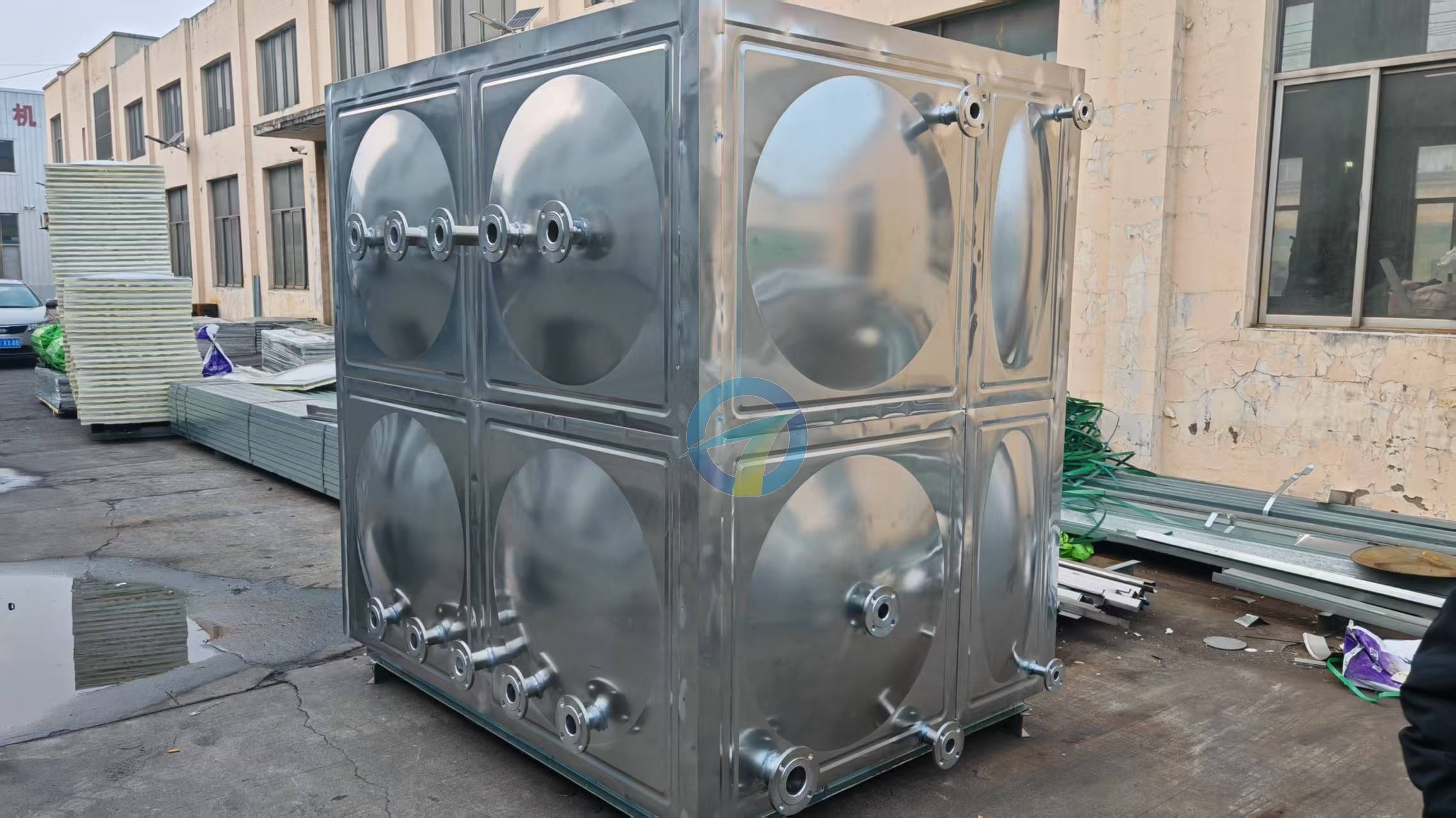
Common Buying Pitfalls for Stainless Steel Fasteners & Bolts of Modular Water Tanks
When importing sectional storage tanks, many overlook stainless steel bolt for water tank buying pitfalls. Most buyers sourcing bolted sectional water tanks spend weeks comparing panel thickness, steel grades and tank capacity. Very few pause to review the bolt specifications. This oversight often leads to expensive headaches later. Fasteners make up only a small share of the total order cost, yet they hold tank panels together, maintain consistent gasket compression and carry static load from the stored water.
This guide covers common pitfalls importers, site contractors and procurement teams run into when sourcing fixing hardware for sectional water tanks. You can spot these red flags before the container leaves the factory.
A tank built with high-quality panels but poor fasteners will often develop joint weeping, rust staining around bolt heads and require repeated re-tightening. From many field failure reports, corrosion or leakage at fasteners appears far earlier than any defect in the tank plate itself.
Pitfall 1: Grade Substitution — 201 sold as 304 or 316
This remains one of the most widespread issues. Grade 201 stainless uses manganese and nitrogen to replace much of the nickel content, cutting raw material costs significantly. Visually, a 201 bolt looks nearly identical to 304 or 316 variants, and a simple magnet test cannot reliably tell them apart.
The difference reveals itself once installed. 201 offers limited chloride resistance. In humid zones or coastal installations, brown rust spots can show up within just a few months. Grade 316 includes molybdenum, which improves pitting resistance. That is why it is widely specified for tanks near coastlines, chlorinated water networks and industrial sites with corrosive airborne contaminants.
Do not accept vague wording such as “stainless steel bolts” on quotations. Always lock in the exact grade, following ISO 3506 standards: A2-70 for 304 and A4-70 for 316. Ask for material documentation linked directly to the production batch.
Pitfall 2: Inadequate surface finishing
Even the correct alloy grade can fail prematurely if finishing work is rushed. Three issues appear most often:
Skipped passivation. Passivation removes free iron from the metal surface and supports the stable chromium oxide protective layer. Many suppliers cut this step to save time. Without passivation, bolts are prone to surface rust even before exposure to aggressive water chemistry. For potable water tanks, passivation should not be treated as an optional add-on.
Damaged or rough threads. Burrs and torn thread edges damage gaskets and make accurate torque control impossible. Rough stainless threads also tend to gall, seizing up during installation.
Residual machining oil. Leftover cutting oil creates hygiene risks for drinking-water applications and traps debris against the bolt surface.
Confirm whether bolts undergo passivation and which standard is followed, such as ASTM A967 or A380. Request a short description of their post-machining cleaning workflow.
Pitfall 3: Incorrect bolt length and sizing
A length error of just a few millimetres can create ongoing sealing problems. Bolts that are too short have poor thread engagement, and nuts will not fully seat. Overlong bolts extend past the joint, interfering with insulation or cladding, and tempt installers to over-torque.
Both scenarios create uneven gasket pressure. Uneven compression is a top cause of joint leakage on sectional tanks, and symptoms usually only emerge once the tank fills and carries full static load.
This mistake usually happens when suppliers quote standard bolt lengths without calculating the total stack height: panel flange, gasket and washer combined.
For every connection point — panel joints, base mounts, roof connections and internal tie rods — define diameter, thread pitch, length, washer and nut type. Cross-check the total stack height against approved construction drawings.
Pitfall 4: Failure to match hardware to site environmental conditions
It is not uncommon to see projects specified with 316 tank panels, yet supplied with regular 304 bolts. Suppliers rationalise this by saying all parts are stainless steel.
Coastal locations, desalination facilities, pool plant rooms and systems with chlorine dosing all operate in high-chloride environments. Under these conditions, 304 fasteners are vulnerable to pitting and crevice corrosion. The area under a washer and inside the bolt hole is where this corrosion most often develops.
This explains many cases where the tank panels remain intact, yet bolt heads and nuts corrode, leaving rust stains running down the tank exterior.
Match fastener grade to the harshest on-site condition, both inside and outside the tank. Where chlorides are present, specify 316 for all nearby and wetted fixings, not only components submerged in water.
Pitfall 5: Hidden quotation tricks
Some quotations look attractively priced for one simple reason: the price only covers tank panels. Fasteners become a separate line item later. Alternatively, suppliers include a basic “standard bolt set”, then offer an upgraded higher-grade option once the order is confirmed. This is a frequent hidden cost trap for tank buyers, and it works because buyers compare headline pricing instead of reviewing full scope.
Always request a complete bill of materials. It must list bolts, nuts, washers, sealing hardware and spare stock, with grade, dimension and quantity for each line. Treat refusal to itemise fastener details as a warning sign.
Practical Buyer Checklist
Include these clauses within your proforma invoice (PI):
- Exact fastener grade and standard (example: A4-70 / 316 to ISO 3506)
- Size, length, thread type and quantity for every connection point
- Confirmation that all fasteners are cleaned and passivated
- Spare hardware allowance, typically 3–5% of total quantity
- Right to reject non-conforming deliveries
Documents to collect:
- Material test certificates, preferably EN 10204 3.1, tied to batch numbers
- Passivation process statement or test record
- Packing list separating different fastener batches
On-arrival inspection steps:
- Cross-check bolt head markings and packaging labels against your PI
- Sample test with a portable XRF PMI analyser; this confirms nickel and molybdenum content far more reliably than magnet tests
- Inspect threads for burrs, damage and leftover oil
- Hand-test nut fit; nuts should run smoothly without binding
- Spot-check bolt lengths against drawing specs
- Photograph and document any non-conformance before starting installation
Final Notes
Fasteners are small components, yet poor-quality bolts can compromise an entire tank project. Swapped alloy grades, skipped passivation, incorrect sizing and undisclosed upgrade charges all lead to leakage, rust marks and costly rework after commissioning.
Treat bolt specifications with the same care you apply to tank panels. Write requirements clearly into your PI and verify hardware upon arrival. This simple verification step costs very little compared with fixing leaking joints on a full water tank.