
FRP Water Tank Buying Mistakes Most Contractors Regret
Blog
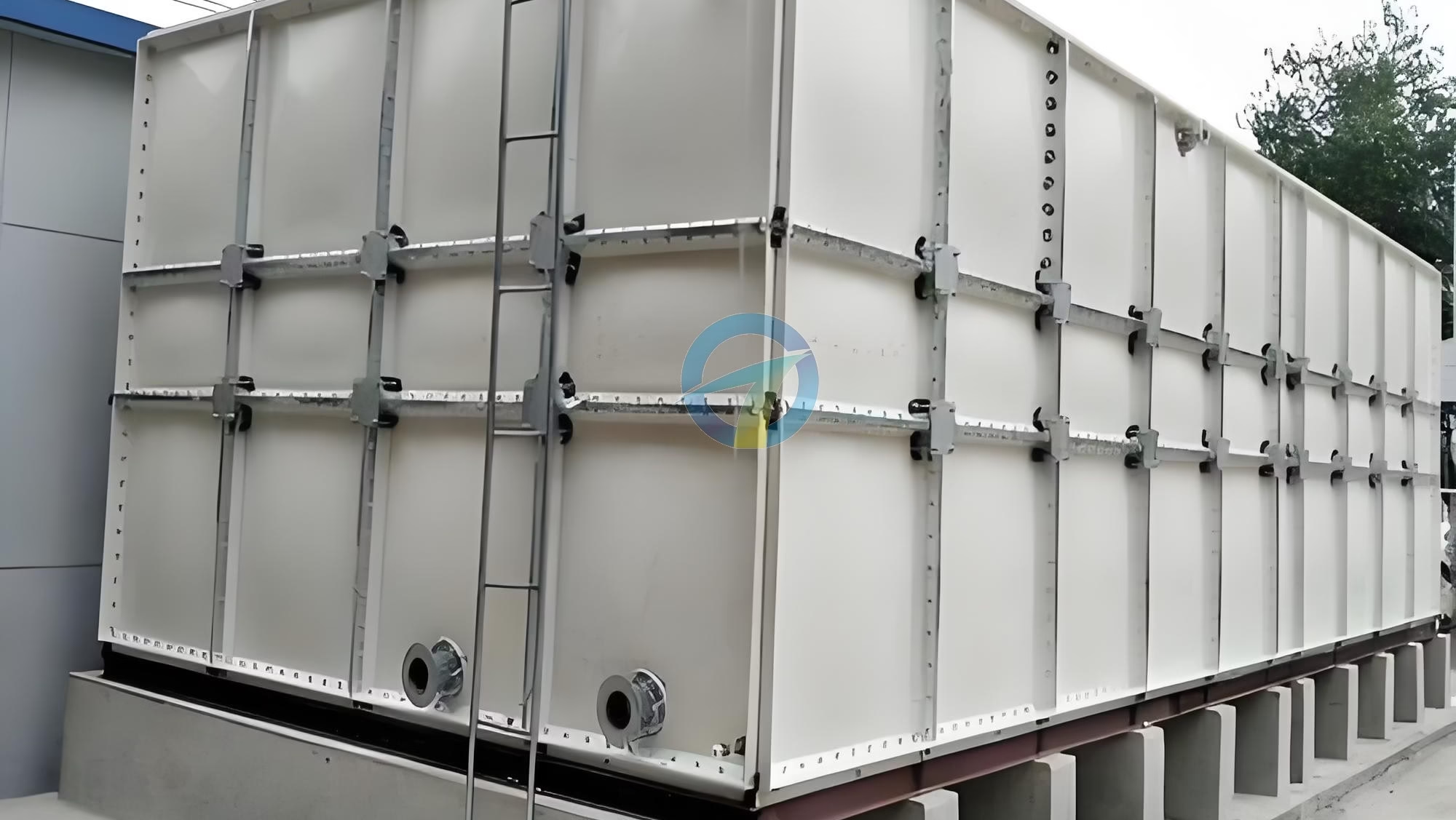
FRP Water Tank Buying Mistakes Most Contractors Regret
Nobody plans a failed client handover. Yet many contractors select the cheapest FRP sectional tank to stay within project budget, only to spend the next one to three years fixing leaking joints, delamination, blistering, chalky surfaces and bulging panels. The cost of rework, client claims and damaged reputation far outweighs the initial savings.
What makes these failures so frustrating is that most risks are locked in long before installation. The fiberglass tank failure reasons we see repeatedly stem from specification shortcuts made at the quotation stage: downgraded resin, underweight laminate, omitted UV protection, or incompatible sealing gaskets. This guide breaks down the most common FRP water tank buying mistakes, with a practical contractor checklist for each risk, so you can catch red flags before signing off.
Mistake 1: Chasing the Lowest Price and Accepting a Downgraded Resin
Resin forms the core of every GRP panel — and it is the easiest material for suppliers to cut corners without obvious visual signs. Two panels may look identical on delivery, yet perform drastically differently after 18 months of continuous water contact.
Resin grade directly determines hydrolysis resistance. Budget orthophthalic resin, or even recycled, heavily filled resin found in ultra-low quotes, gradually absorbs water over time. The laminate softens, water-side blisters develop, and structural strength slowly declines. Food-grade isophthalic resin delivers superior water resistance and remains the reliable baseline for potable and non-potable water storage.
For drinking water projects, certification is another critical risk point. A quotation marked “food grade” is only a claim without valid documentation. Depending on your target market, you may require WRAS, NSF/ANSI 61 or equivalent approvals. The certificate must cover the exact resin system used for your panels, not a generic sample or separate product line.
Contractor checklist:
- Confirm resin type in writing: specify isophthalic resin, not merely “unsaturated polyester”.
- Request resin manufacturer datasheets and batch traceability records.
- Verify that potable water certification lists the supplier and matching product model.
- Ensure the water-contact inner surface features a resin-rich barrier layer.
- Treat quotes far below the normal market range for the same capacity with caution.
Mistake 2: Insufficient Fiberglass Content and Hidden Thin Laminate
An FRP panel’s strength comes from glass fibre, not resin. Resin-heavy, fibre-light panels can pass a quick visual inspection while remaining structurally weak. This is one of the quietest leading causes of fiberglass tank delamination.
Typical supplier shortcuts include fewer reinforcement layers, lower fibre weight, substitution of standard E-glass with inferior C-glass, and thinner laminate in low-visibility zones such as panel edges and flanges. Poor fibre wet-out and trapped air between layers worsen the issue. After repeated fill-drain cycles, internal separation begins, and delamination cannot be permanently repaired once it starts.
Contractor checklist:
- Ask for the full laminate schedule: fibre type, number of layers and weight per layer.
- Obtain the declared glass fibre percentage and supporting test reports.
- Fix a minimum panel thickness and arrange sampling checks on delivered goods.
- Confirm extra reinforcement layers for flanges and corner sections.
- Compare panel weight per square metre across bids; an unusually light panel is a warning sign.
Mistake 3: No Proper UV Stabilisation or Gel Coat for Outdoor Installation
Panels that perform reliably indoors degrade rapidly under tropical sunlight or aggressive coastal conditions. FRP tank UV damage first appears as surface chalking — a dull, powdery outer layer — before progressing to fibre blooming, where glass fibres become exposed. Once the surface barrier breaks down, heat and moisture accelerate irreversible degradation.
A frequent sales trick is pricing indoor-grade panels for outdoor projects. Specifications stay vague, the price looks attractive, and problems only surface after one or two seasons of sun exposure. Quality outdoor FRP panels require a UV-stabilised resin system plus a properly sized protective gel coat layer.
Contractor checklist:
- Clearly state outdoor installation and local climate conditions in tender documents.
- Request full specifications for the gel coat and protective surface thickness.
- Confirm UV stabilisers are integrated into the resin or outer surface layer.
- Ask for references from FRP tanks that have operated outdoors for multiple years.
- Select opaque or dark panel colours where suitable to reduce internal algae growth.
Mistake 4: Wrong Joint System and Incompatible Gaskets
In bolted sectional tanks, joints are the primary leakage points. From our field experience, FRP tank gasket leaks are rarely caused by installation error alone. Most originate from poor joint design or unsuitable sealing materials.
Standard low-grade rubber strips harden, shrink and crack under temperature cycling and chlorine exposure. EPDM gaskets, or equivalent potable-water-approved materials, maintain stable elasticity far longer. Structural design matters equally: under-specified internal stays, tie rods or external bracing let panels flex when filled. Even premium gaskets cannot maintain a tight seal when joints repeatedly open and shift.
Contractor checklist:
- Specify EPDM or certified equivalent gasket material and request its datasheet.
- Confirm bolt material and corrosion-resistant coating suitable for damp, coastal environments.
- Ask for structural drawings showing stays, bracing and flange dimensions.
- Verify the sealing system has passed full-height hydrostatic testing.
- Include spare gaskets within the supply scope.
Mistake 5: Ignoring Design Pressure Rating and Hydrostatic Load
Water pressure increases with depth. The bottom panels of a tall tank carry substantially higher loads than panels near the top. Suppliers quoting standard low-pressure panels for deep water columns can cut costs, but the outcome is panel bulging, overstressed joints and, in severe cases, structural failure.
This is one of the most overlooked fiberglass tank failure reasons. The tank may work perfectly at first, with deformation developing gradually after repeated full-load cycles. Panels on different horizontal rows should feature tailored thickness and reinforcement matched to their position in the water column.
Contractor checklist:
- Provide the supplier with exact water height, not only tank volume.
- Request structural design calculations and confirm the applicable standard, such as BS EN 13280.
- Confirm bottom-row panels include extra thickness or targeted reinforcement.
- Review the design safety factor and allowable panel deflection.
- Require structural calculations signed by a qualified professional engineer.
Mistake 6: Ambiguous Warranty and After-Sale Loopholes
A lengthy warranty on paper offers little protection if the wording lets the supplier avoid liability. GRP tank claims are commonly rejected under the same excuse: damage stems from site installation and is therefore excluded.
Watch for short coverage windows, clauses excluding delamination, blistering and UV degradation, and vague terms such as “normal wear and tear”. Clarify responsibility for dismantling, freight and replacement costs, and confirm whether formal installation manuals and supervision support are provided to define accountability.
Contractor checklist:
- Secure written warranty terms separated by component: panels, gaskets and bolts.
- Confirm delamination, blistering and joint leakage are covered under warranty.
- Clarify what supporting evidence is required to submit a claim.
- Agree who bears costs for removal, shipping and reinstallation.
- Collect official installation guidelines and document photos at each construction stage.
Final Tender Review Checklist
Before approving any FRP tank quotation, cross-check these items:
- Isophthalic resin specified in writing, paired with potable water certification for the supplied product
- Complete laminate schedule, glass fibre type and declared fibre content
- UV-stabilised resin and gel coat specified for outdoor applications
- EPDM gaskets and corrosion-resistant fasteners
- Structural calculations based on actual water height, with reinforced lower panels
- Warranty terms explicitly covering delamination, blistering and joint leakage
A cheap FRP tank is never a true bargain. The upfront saving usually comes back with extra costs in repairs, claims and eroded client trust. Avoiding these FRP water tank buying mistakes costs nothing more than asking the right questions early in the tender process.
If you have tank specifications and want a second opinion, feel free to send them over. We can review whether your FRP tank design meets the required compliance standards.