
Stainless Steel Sectional Fire Water Tank: Standards, Materials and Selection Guide
Blog
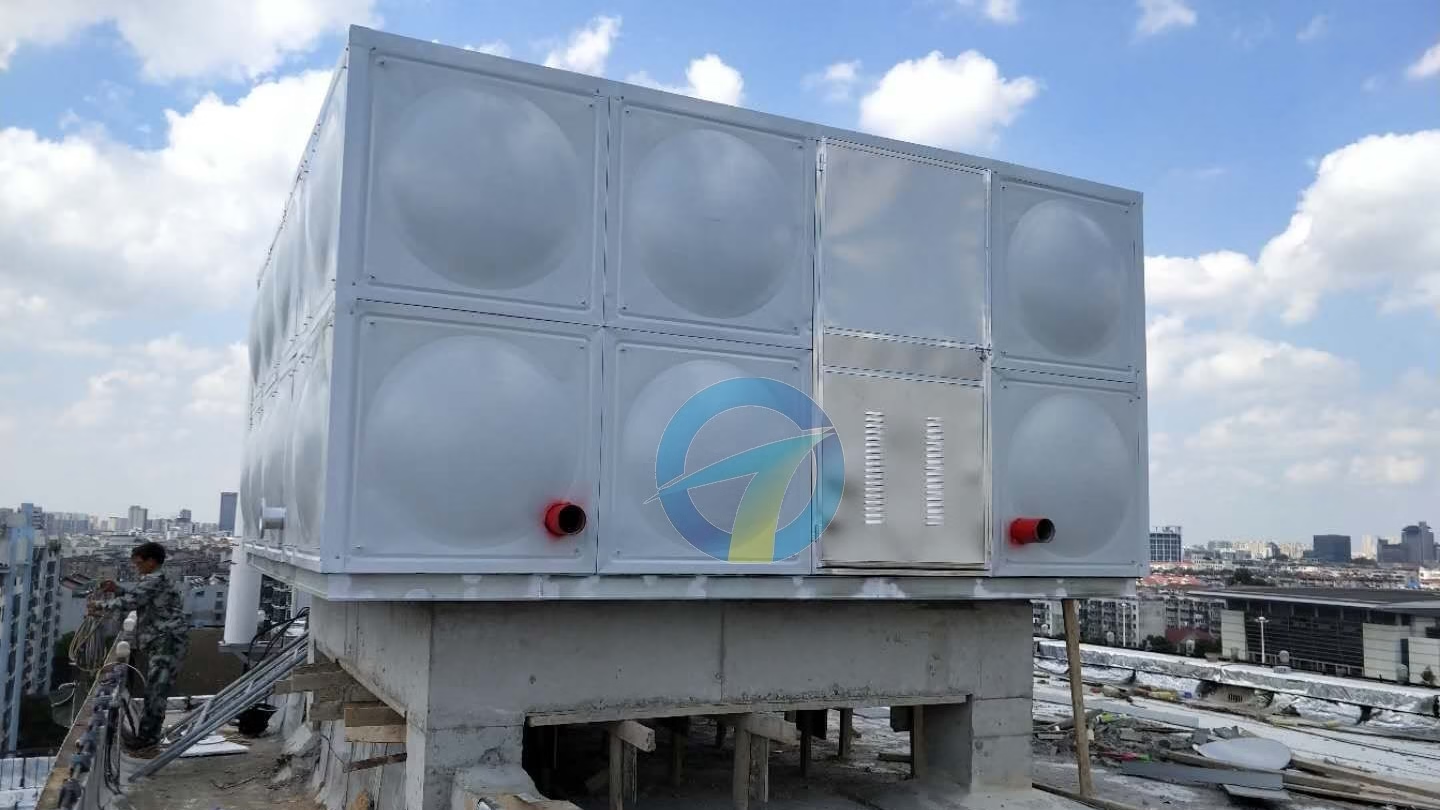
Stainless Steel Sectional Fire Water Tank: Standards, Materials and Selection Guide
A fire water tank is the one asset in a building that must work on the day nothing else does. Yet on many projects it is treated as an afterthought: specified late, squeezed into a plant room that was never designed for it, and approved on price alone. The result is familiar to most fire engineers: a tank that cannot be delivered through the available access, a coating that fails within a few years, or a reserve that no longer meets the required volume because corrosion has reduced usable capacity.
A stainless steel sectional fire water tank addresses these problems. It is built from pressed stainless steel panels that are bolted together on site, so it can be installed in restricted spaces, requires no hot work, and maintains its integrity without relying on an internal coating. This guide covers the design requirements, material choices, corrosion protection and maintenance points that fire engineers, contractors and procurement teams should check before specifying one.
What Is a Stainless Steel Sectional Fire Water Tank?
A stainless steel sectional fire water tank is a modular storage vessel assembled from standardised panels, joined with bolts and sealed with gaskets. It may also be described as a bolted stainless steel fire tank or a sectional fire water tank. Panels are supplied flat, carried to the installation location and assembled over a prepared base.
Because the tank is modular, the footprint, height and compartment layout can be adjusted to suit the building. Typical fire protection configurations include a single large reserve, twin compartments that allow one half to be isolated for cleaning while the other stays in service, and combined tanks where the fire reserve is separated from domestic storage.
Fire Protection Water Supply Requirements
Tank volume and arrangement are set by the fire protection standard and the hazard classification of the building, not by the tank manufacturer. The documents most often referenced on export projects include: NFPA 13 and NFPA 22: NFPA 13 sets the sprinkler water demand and duration, while NFPA 22 covers the design, construction, installation and maintenance of water tanks for private fire protection. NFPA 20 and NFPA 25: NFPA 20 governs the pumps drawing from the tank, including suction conditions, and NFPA 25 sets inspection, testing and maintenance requirements. BS EN 12845: the main UK and European standard for automatic sprinkler systems, which includes water supply and storage tank requirements by hazard class. BS 9990 and BS 9999: relevant where wet riser systems and building fire safety design require stored water.
The practical points that follow from these standards are consistent: Effective capacity matters, not nominal capacity. Freeboard, the volume below the outlet, and any vortex or suction-level allowance reduce what the system can actually draw. State the required effective volume in the tender documents. Pump suction must be considered. Outlet position, anti-vortex plates, minimum water level and tank height all affect pump performance and should be coordinated with the pump designer. Refill capability and duration. The standard may allow a reduced tank volume where a reliable automatic refill is available. Confirm this with the authority having jurisdiction. Level monitoring and alarms. Low-level alarms, overflow arrangements and, where required, temperature protection should be part of the specification.
Local authorities and insurers may add their own conditions, so confirm which approvals apply to the project before ordering.
Why Stainless Steel for Fire Water Storage?
Fire water often sits unused for long periods. That stagnation is exactly the condition that exposes weak coatings, UV-degraded resins and poorly sealed joints. Stainless steel responds well to these conditions for several reasons: Corrosion resistance without coatings. The passive chromium oxide layer protects the metal, so there is no internal lining to blister, peel or contaminate the water. Structural stability. Stainless steel panels keep their stiffness and dimensional accuracy over the service life, which helps keep bolted joints tight. Opaque construction. Light exclusion limits algae growth, which can block strainers and suction screens. Long service life. With correct grade selection, a stainless tank can remain in service for decades, which lowers lifecycle cost even if the initial price is higher. Fire and heat behaviour. Stainless steel does not burn or contribute fuel, which is relevant for tanks inside buildings or close to hazardous areas.
Material Selection and Corrosion Protection
Choosing the grade
AISI 304 (1.4301): suitable for most indoor fire water tanks with low chloride levels. AISI 316 / 316L (1.4401 / 1.4404): recommended near the coast, where water chloride content is high, or where the water may be treated or recirculated. Duplex grades: worth considering only where chloride levels or loads exceed what 316 can handle.
Test the water source before selecting the grade. Borehole, harbour-side and recycled water can all have chloride levels that change the right choice.
Details that decide corrosion life
Grade selection is only one part of corrosion protection. Pay attention to: Gaskets and sealants: use materials compatible with long-term stagnant water and temperature range, and confirm approvals where the tank may also serve potable functions. Bolts, tie rods and fittings: these should match the panel grade, since mixed materials can create galvanic issues and crevice corrosion. Welds and fabrication: where welded fittings or pipework connections are used, pickling and passivation after fabrication restore the protective layer. Water chemistry and stagnation: chlorides, sulphides and bacterial activity can pose problems in stagnant conditions, so the water treatment plan should be part of the design review. External environment: plant rooms with chemical vapours, swimming pool atmospheres or marine air need an appropriate grade and ventilation.
Stainless Steel vs GRP Fire Water Tanks
Both types are bolted sectional systems, so they share advantages in delivery and installation. The differences come down to materials and long-term behaviour.
| Factor | Stainless steel sectional | GRP sectional |
|---|---|---|
| Corrosion mechanism | Passive layer; grade-dependent | Resin and laminate degradation |
| Internal coating | Not required | Gel coat or resin surface |
| UV and light | Opaque; not affected by UV | Needs opaque or protected design |
| Structural stiffness | High; stable under load | Lower modulus; deflection to be checked |
| Fire behaviour | Non-combustible | Resin-based; confirm fire performance |
| Recycling at end of life | Fully recyclable | Limited recycling options |
| Initial cost | Typically higher | Typically lower |
GRP remains a practical choice for some projects, particularly where budget is the main driver and fire performance of the installation location is not critical. For high-risk buildings, tanks installed inside occupied structures, and facilities where long design life and low maintenance are priorities, stainless steel is often the more defensible specification. Always compare using lifecycle cost and the approval requirements of the project, not purchase price alone.
Installation and Commissioning
Installation of a stainless steel sectional fire water tank follows a controlled sequence:
- Confirm base design, flatness and load capacity with the structural engineer.
- Lay floor panels and seal joints according to the supplier’s drawings.
- Assemble wall panels in rows, tightening bolts to the specified torque.
- Fit reinforcement, roof panels, manholes, vents, overflow and level instruments.
- Install suction, return, drain and fill connections, including anti-vortex arrangements.
- Fill, leak test and record results.
- Flush and disinfect as required, then commission with the pump and control system.
Because no welding or coating is done on site, installation is typically cleaner and easier to schedule than for site-built steel tanks, which matters in occupied or fire-sensitive buildings.
Inspection and Maintenance
Fire water tanks need periodic checks to remain compliant. Reference NFPA 25 or the local equivalent, and plan routine tasks such as:
- Visual inspection of panels, bolts, gaskets and supports
- Checking water level, alarms and float or level sensors
- Inspecting the roof, vents and manholes for damage or contamination
- Cleaning and sediment removal at intervals set by the maintenance plan
- Inspecting the tank interior for pitting, staining or crevice corrosion, especially around joints and fittings
Twin-compartment designs make cleaning easier because one side can be drained while the other keeps the fire reserve available. Ask the manufacturer for a maintenance manual and spare gasket supply as part of the handover documents.
Documents to Request Before You Order
- Structural calculations for the specified height, wind and seismic conditions
- Material certificates for panels, bolts and gaskets
- Assembly drawings and installation manual
- Relevant approvals or test reports required by the project or insurer
- Hydrostatic test procedure and acceptance criteria
FAQ
Is a stainless steel sectional fire water tank accepted under NFPA and BS requirements?
Acceptance depends on the standard cited in the project specification, the design of the specific tank and the authority having jurisdiction. Provide the standard and approval requirements early so the manufacturer can confirm compliance and supply the right documentation.
What stainless steel grade should I choose for a fire water storage tank?
Grade 304 is common for low-chloride water in indoor installations. Grade 316 or 316L is preferred for coastal sites or higher chloride content. A water analysis should drive the final decision.
Can the tank be installed inside a building?
Yes. Panel delivery makes it practical to install in basements, plant rooms and rooftop enclosures, as long as the structure can carry the filled weight and there is working space around the tank for inspection.
How does the cost compare with a GRP fire water tank?
Stainless steel usually has a higher initial price. Over the full service life, lower maintenance and a longer design life can narrow or reverse the difference, depending on the site and water conditions.
Can a combined fire and domestic tank be supplied?
It can be, using separate compartments and dedicated outlets so that the fire reserve cannot be drawn down by domestic use. Confirm approval requirements for the domestic compartment.
Request a Project Quotation
If you are specifying a fire water storage tank, send us your required effective volume, applicable standards, site conditions and water source details. Our engineering team will respond with a proposed configuration, drawings and a quotation. Contact thwatertank.com to discuss your project.