
What is Stainless Steel Sectional Tank? Benefits & Applications
Blog
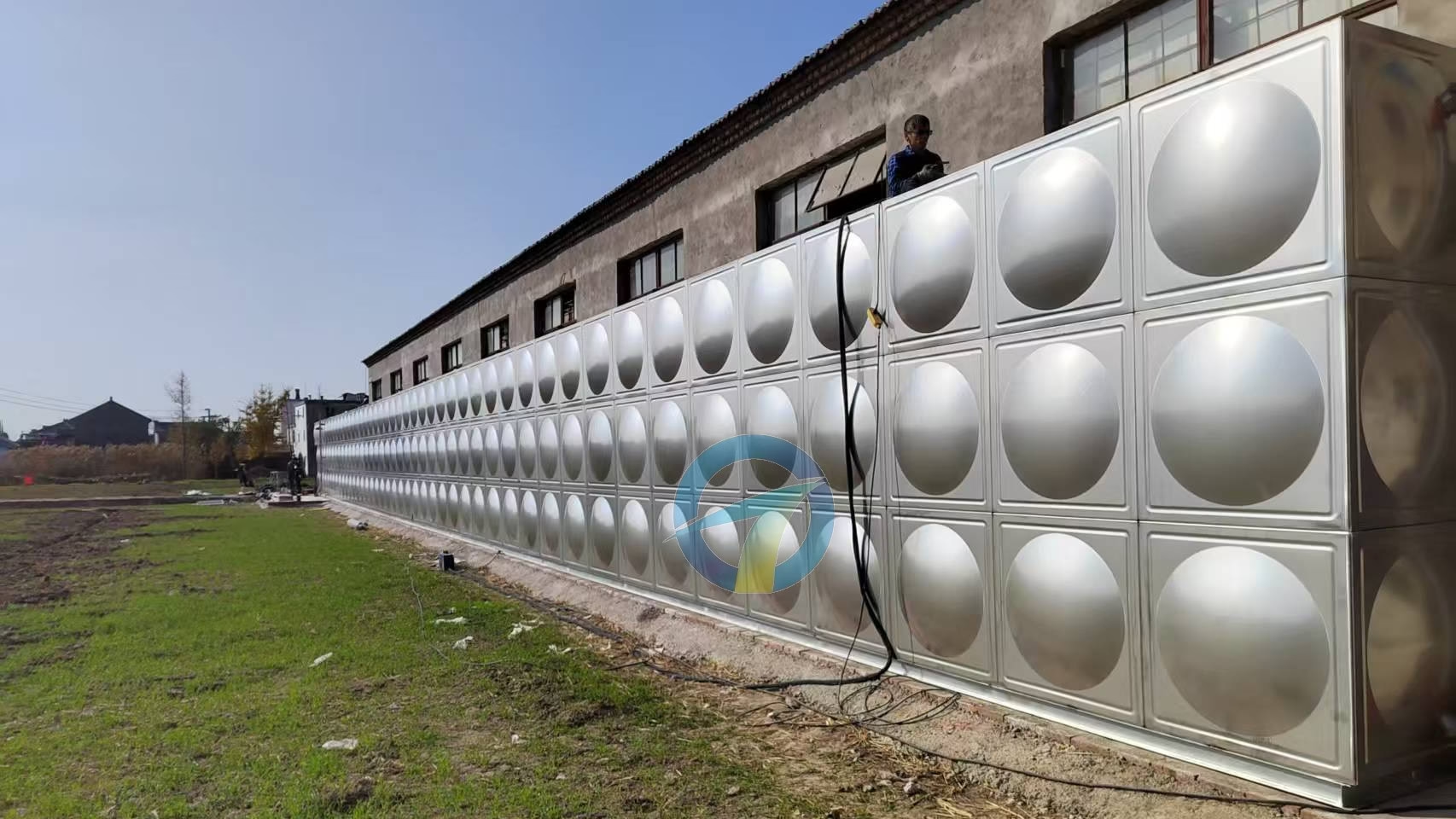
What is Stainless Steel Sectional Tank? Benefits & Applications
Water storage is a recurring design problem on infrastructure projects. Sites often have limited crane and truck access, rooftops and basements restrict tank dimensions, and schedules rarely allow for long on-site fabrication. Concrete tanks need curing time and cannot be relocated. Welded steel tanks depend on skilled field welding and reliable coating quality.
Stainless steel sectional tanks address many of these constraints. They are built from factory-pressed panels that are assembled on site, which makes them practical for projects where access, construction speed and water quality all matter. This article explains what they are, how they differ from welded tanks, how to choose between 304 and 316 stainless steel, and where they are typically used.
What Is a Stainless Steel Sectional Tank?
A stainless steel sectional tank, also called a sectional panel tank or bolted panel water tank, is a storage vessel assembled from standardised stainless steel panels. The panels are joined with bolts and sealed with gaskets or sealing strips. The tank is built on site from individual components rather than delivered as one pre-fabricated vessel.
Construction Principle: Panel, Bolt and Gasket
Three core elements define this modular design:
- Panels: Pressed stainless steel sheets, commonly in modular sizes such as 1 m × 1 m, with embossed patterns and flanged edges that add structural stiffness. Panel thickness is selected according to water depth and hydrostatic load, so lower panels are usually thicker than upper sections.
- Bolts: Stainless steel fasteners clamp adjacent panel flanges together. Fastener material should match the panel grade to avoid galvanic corrosion risks.
- Gaskets and sealants: Elastomer gaskets or sealing strips, such as EPDM or silicone, are placed between flanges to make the joints watertight. For potable water, sealing materials should carry relevant drinking water approvals.
Larger tanks require internal tie rods, external bracing or a supporting frame to control deflection. A structural calculation review by the manufacturer is required for each custom project.
Sectional Bolted Panel Tank vs Welded Steel Tank
Both are steel water storage tanks, but they differ significantly in fabrication, delivery and installation.
| Aspect | Sectional bolted panel tank | Welded steel tank |
|---|---|---|
| Fabrication | Panels pressed in a factory, assembled on site | Plates cut and welded, either in workshop or on site |
| Transport | Flat-packed panels, shipped in standard trucks or containers | Large shop-built units are bulky; field-erected tanks require full welding crews |
| Installation | Bolted by trained crews, minimal heavy lifting required | Requires certified welders, weld inspection and surface coating work |
| Capacity change | Panels can be added or removed if the design allows | Difficult to modify after fabrication is complete |
| Repair | Individual panels or gaskets can be replaced separately | Weld repairs usually require draining and re-coating |
| Joints | Multiple bolted joints, performance depends on gasket condition | Fewer joints, continuous welded seams |
Welded tanks remain a solid choice for extra-large volumes, permanent fixed installations and some special process applications. Sectional tanks are generally preferred where site access is restricted, project schedules are tight, or future expansion / relocation may be needed.
Material Options: 304 vs 316 Stainless Steel
The stainless steel grade should be selected based on actual water quality data instead of default selection.
304 stainless steel tank: Contains roughly 18% chromium and 8% nickel. It works well for potable water, fire water and rainwater with low chloride levels. Widely adopted for building and municipal storage under moderate chlorination conditions.
316 stainless steel tank: Adds about 2% to 3% molybdenum, delivering better resistance to pitting and crevice corrosion in chloride-rich environments. It is commonly specified for coastal sites, brackish water, desalinated water, high-dose chlorination systems and many wastewater applications.
Before final selection, request a full water analysis covering chloride concentration, pH, temperature and disinfectant dosing. In high-chloride regions such as the Gulf and parts of Southeast Asia, 316 is often the safer specification. Whichever grade you choose, panels need proper pickling and passivation, and contact with carbon steel tools should be avoided during handling.
Core Benefits of Stainless Steel Sectional Tanks
Modular Design and Flexible Capacity
Standard panel dimensions support many combinations of length, width and height. The tank can be custom-sized to fit plant rooms, rooftops or irregular footprints, and capacity can often be upgraded later if the original structural design reserves allowance.
Easy Transport and Fast On-Site Assembly
Panels are shipped flat and can be handled manually or with light lifting equipment. This is ideal for remote sites, basements and rooftops where a one-piece welded tank cannot be delivered. Total assembly time depends on tank size and crew experience, yet on-site work requires far less heavy machinery than shop-fabricated vessels.
Corrosion Resistance
Stainless steel forms a passive chromium oxide protective layer that resists corrosion without extra paint coating. This removes the risk of coating failure, a common maintenance headache for painted carbon steel tanks.
Suitable for Potable Water
Stainless steel is hygienic and non-porous; it does not require internal lining for drinking water storage. When panels, gaskets and sealants meet drinking water standards, the tank can safely store treated potable water.
Easy Maintenance
Smooth internal surfaces are simple to clean. Gaskets can be inspected and replaced periodically, and damaged individual panels can be swapped out without permanently shutting down the whole tank.
Typical Applications
- Potable water storage: Residential towers, hospitals, hotels, schools and industrial plants use sectional tanks for domestic and treated water supply.
- Fire water storage tank: Sectional tanks serve as fire reserve storage for buildings, warehouses and industrial facilities. Design should follow local fire authority requirements and applicable fire tank standards such as NFPA 22 where the project specifies it.
- Rainwater harvesting tank: Modular construction suits above-ground or rooftop rainwater harvesting tanks, especially when excavation space is limited.
- Wastewater storage tank: Sectional tanks work as equalisation tanks, buffer tanks or treated effluent storage. Chemical compatibility must be verified; 316 stainless steel or FRP/GRP panels may be more suitable depending on wastewater properties.
- Municipal water tank and industrial infrastructure: Municipal water distribution reservoirs, ground or elevated water tanks, plus industrial process and cooling water systems often adopt bolted panel designs when fast delivery and flexible capacity are priorities.
Installation and Maintenance Notes
- Foundation: Prepare a level, load-bearing base, normally a reinforced concrete slab or steel support frame, engineered for full operating water load.
- Assembly: Follow the manufacturer’s panel layout sequence and required bolt torque values. Uneven bolt torque is a common cause of joint leakage.
- Testing: Fill the tank in stages and inspect all joints carefully. Disinfect the tank before commissioning for potable water use.
- Routine checks: Periodically inspect gaskets, bolts, air vents, overflow pipelines and access hatches. Schedule internal cleaning according to local water quality conditions.
- Water quality monitoring: Track chlorine and chloride levels, as these directly affect the long-term corrosion performance of stainless steel.
Frequently Asked Questions
How long does it take to install a sectional panel tank?
It depends on total capacity, site access and crew experience. Small tanks may take a few days, while large-scale installations can take several weeks. The manufacturer should provide a detailed construction schedule for your custom design.
Can the capacity of a bolted panel water tank be expanded later?
Often yes, provided the original structural design and foundation reserve sufficient load capacity. Expansion needs a new structural review, and the tank will likely need to be taken offline during modification.
Should I choose 304 or 316 stainless steel?
Select 304 for regular potable, fire and rainwater projects with low chloride content. Select 316 for coastal locations, high chloride water, heavy disinfection dosing or aggressive wastewater. A professional water analysis is the best basis for final material selection.
Do bolted joints leak?
Properly designed, correctly assembled joints with qualified gaskets stay watertight during service. Leakage normally comes from poor installation, incorrect bolt torque or aged gaskets, so regular inspection and gasket replacement form part of standard maintenance.
When is an FRP/GRP panel tank a better option?
FRP/GRP panel tanks suit aggressive chemical environments and certain wastewater applications where stainless steel is vulnerable to corrosion. We supply both stainless sectional tanks and FRP GRP panel tanks for your project evaluation. Material selection should be decided by stored media, operating temperature and project specifications.
Conclusion
Stainless steel sectional tanks are an excellent fit for projects with restricted site access, tight construction timelines or flexible capacity requirements. Common use cases include building water supply, fire protection reserve, rainwater harvesting, wastewater treatment plants and municipal water infrastructure.
Welded tanks are still suitable for some large, permanent installations, so the best solution is determined by site conditions, water chemistry and full lifecycle cost.
If you are planning a water storage project and need guidance on 304 or 316 stainless steel, or FRP/GRP alternatives, contact our team for custom tank design and a quotation based on your required capacity, site location and water quality data.